
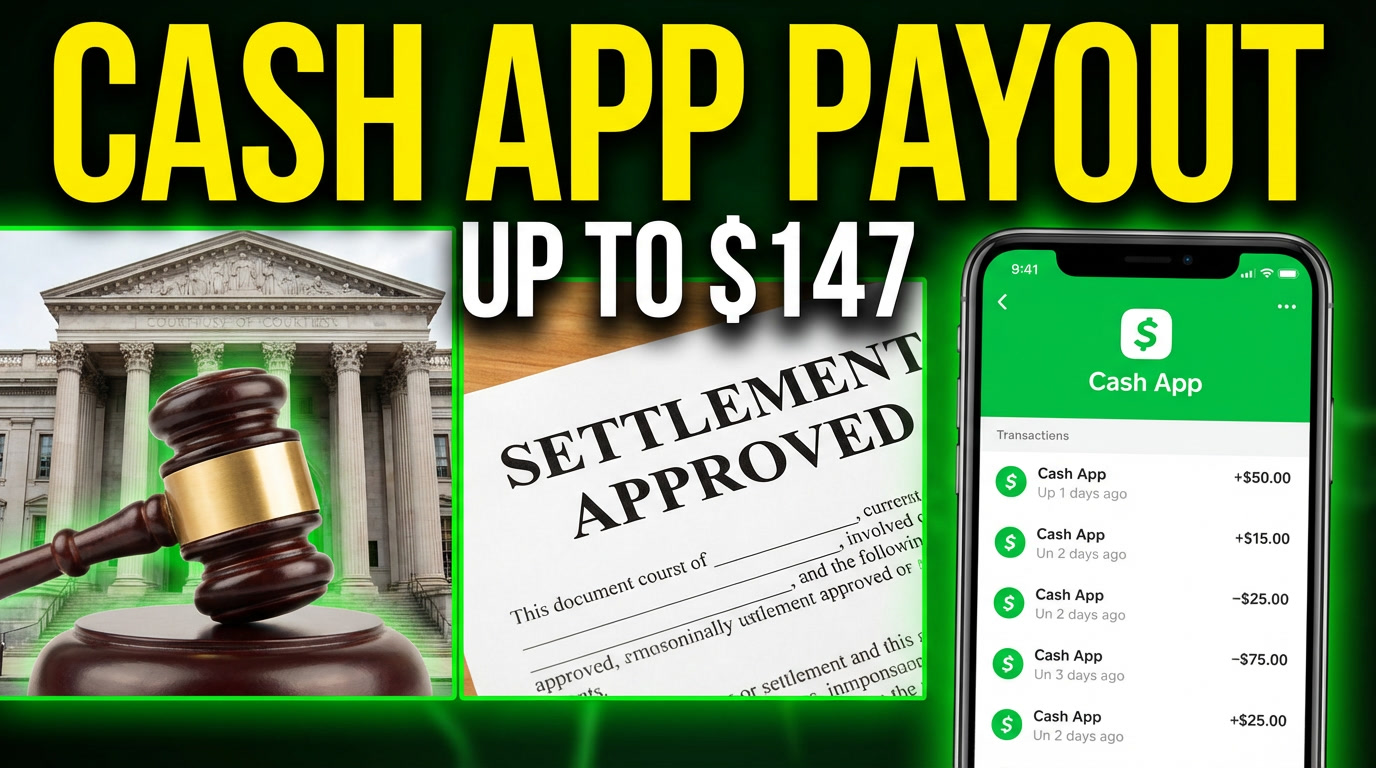
A quiet federal court ruling just unlocked real money for thousands of Americans — and most people barely noticed it happen.
A $12.5 million class action settlement involving Cash App and its parent company, Block, has now been officially approved, clearing the way for payouts of up to $147 per eligible person. The case revolves around Cash App’s popular “Invite Friends” feature and whether it crossed legal lines by sending referral texts without proper consent.
If you ever received one of those messages in Washington state, this may have applied to you — though the claim window has now closed.
What the Lawsuit Was Really About
At the center of the case was a familiar fintech growth tactic: referral bonuses.
Cash App offered users $5 for inviting friends to join the platform. The problem, according to plaintiffs, was how those invites were sent. The lawsuit alleged that referral texts were delivered without the recipient’s consent, violating Washington’s Commercial Electronic Mail Act (CEMA) and the state’s Consumer Protection Act (CPA).

Those laws are strict. Washington doesn’t play around when it comes to unsolicited commercial texts, even when they come from another user rather than the company itself.
Block denied all allegations but agreed to settle — a common move in class actions where the cost of litigation outweighs the benefit of fighting.
Final approval came on December 2, 2025, from U.S. District Judge John Chun.
Who Was Eligible for a Payout
Not everyone who’s ever used Cash App qualified. Eligibility was narrow and specific.
You qualified only if all of the following applied:
- You received a Cash App referral text
- The message arrived between November 14, 2019 and August 7, 2025
- You did not consent to receiving that message
- The phone number that received the text was yours
- You were located in Washington state
If you had previously agreed to marketing or referral messages — even indirectly — you were excluded.
This was a state-specific settlement, meaning Cash App users outside Washington were not part of the class.
How Much Money Was on the Table
The settlement fund totaled $12.5 million, but individual payouts depended on how many people filed valid claims.
Court documents estimated that Washington had roughly 1.97 million potentially eligible phone numbers, but the settlement assumed only 5% would file claims — a common assumption in consumer class actions.
That’s how the payout math worked out.
| Category | Details |
|---|---|
| Total Settlement | $12.5 million |
| Estimated Payout | $88 – $147 per person |
| Eligible Period | Nov. 14, 2019 – Aug. 7, 2025 |
| Eligible Group | Washington residents only |
| Claim Deadline | October 27, 2025 |
If fewer people filed, payouts landed closer to the high end. If more filed, amounts dropped.
Missed the Deadline? Here’s the Reality
The claim deadline was October 27, 2025.
If you didn’t file by then, there’s no appeal process, no late submission window, and no second chance. Once the claims administrator locks the list, that’s it.
This is the part of class actions that frustrates consumers the most — money exists, but it only goes to people who file on time.
What Block Had to Say
Block’s response followed the standard corporate playbook.
In its official statement, the company said it:
- Denies violating any state or federal laws
- Does not admit wrongdoing
- Settled solely to avoid prolonged litigation
That language appears in almost every major class action settlement and does not imply guilt.
Block (formerly Square Inc.) continues to operate Cash App nationwide without admitting the referral system was unlawful.
When Payments Are Expected
The settlement administrator hasn’t published an exact payment date yet.
However, class action settlements typically distribute payments within a few months of final approval, once appeals windows close and claims are validated.
Payments are usually sent by:
- Direct deposit
- Paper check
- Or digital payment platforms
Eligible claimants should watch for official settlement communications rather than unsolicited messages — scams often follow high-profile payouts.
General guidance on class action settlement processes can be found through federal court resources at https://www.uscourts.gov/ and consumer protection frameworks at https://www.ftc.gov/.
Why This Case Matters Beyond Cash App
This lawsuit fits into a growing legal trend: cracking down on consent loopholes in digital marketing.
Referral systems, automated texts, and “invite a friend” tools have exploded across fintech, telecom, and social apps. Regulators and courts are increasingly skeptical when those systems result in messages sent to people who never opted in.
A similar case involving AT&T, for example, has drawn attention for potential payouts reaching thousands of dollars per claimant, underscoring how serious these violations can become.
The message from courts is clear: growth tactics don’t override consent laws.
FAQs:
Who was eligible for the Cash App settlement?
Washington residents who received unsolicited Cash App referral texts between November 2019 and August 2025.
How much could claimants receive?
Between $88 and $147, depending on the number of valid claims.
Is the claim deadline still open?
No. The deadline was October 27, 2025.