Long-Term Digital Workforce Development – Building Sustainable Skills for the Future Economy

Digital Workforce

Digital transformation is no longer a short-term initiative. It represents a structural shift in how organizations operate, deliver services, and compete. As automation, artificial intelligence, cloud computing, and data analytics reshape industries, long-term digital workforce development has become a strategic priority. Institutions and businesses must move beyond short-term training programs toward sustained, scalable skill-building frameworks. … Read more


Innovation Measurement Frameworks for Institutions – Evaluating Progress, Impact, and Value

Innovation Measurement

Innovation is often described as a driver of institutional growth, competitiveness, and societal advancement. Universities, research centers, public agencies, and corporations invest significant resources in innovation initiatives. However, without structured measurement frameworks, it becomes difficult to determine whether these efforts produce meaningful outcomes. Innovation measurement frameworks provide systematic approaches to assess inputs, processes, outputs, and … Read more

Adaptive Strategy in Technology Management – Navigating Change in a Dynamic Digital Environment

Dynamic Digital Environment

Technology management operates in conditions of constant change. Rapid innovation cycles, evolving regulatory standards, competitive disruption, and shifting customer expectations create uncertainty for organizations. In this environment, adaptive strategy has become a central approach. Rather than relying on fixed long-term plans, adaptive strategy emphasizes flexibility, learning, and continuous adjustment. Adaptive strategy in technology management involves … Read more

Ethical Data Stewardship in the Digital Age – Protecting Trust in an Information Economy

Ethical Data Stewardship

Data has become one of the most valuable assets in the digital economy. Governments, corporations, research institutions, and nonprofit organizations collect and analyze vast amounts of information to improve services, enhance efficiency, and generate innovation. However, with increased data collection comes increased responsibility. Ethical data stewardship refers to the responsible management, protection, and use of … Read more

Data Driven Leadership in Complex Organizations – Turning Information into Strategic Action

Data

In complex organizations, decision-making rarely follows a simple chain of command. Multiple departments, layered hierarchies, diverse stakeholders, and large volumes of data create intricate operating environments. In this context, data-driven leadership has emerged as a critical capability. Rather than relying solely on intuition or precedent, leaders increasingly use structured data analysis to guide strategy, performance … Read more

Enterprise Analytics in Policy Decision Making – Transforming Governance Through Data Intelligence

Enterprise Analytics

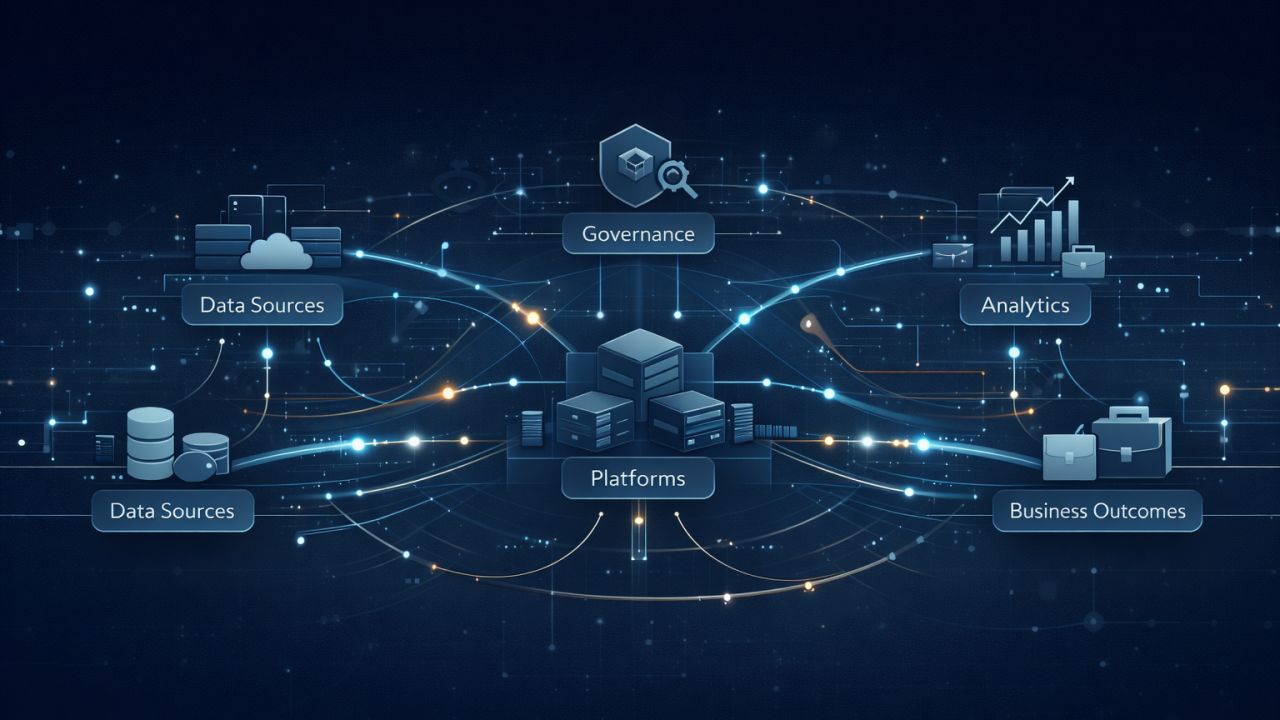
Enterprise analytics has become a strategic tool in modern governance. As governments and large institutions manage vast amounts of administrative, economic, and social data, advanced analytics systems enable more informed and evidence-based policy decisions. Enterprise analytics refers to integrated data platforms and analytical tools that aggregate, process, and interpret data across departments to support strategic … Read more

Cross-Border Collaboration in Technology Innovation – Driving Global Progress Through Partnership

Collaboration in Technology

Technology innovation increasingly transcends national boundaries. Research laboratories, startups, multinational corporations, and universities collaborate across countries to develop new products, platforms, and digital systems. Cross-border collaboration in technology innovation has become a strategic necessity rather than a supplementary activity. By combining expertise, resources, and diverse perspectives, international partnerships accelerate progress and expand global impact. However, … Read more

ATISR Report on Digital Talent Development – Building Skills for a Technology Driven Future

ATISR

The ATISR report on digital talent development examines how institutions, organizations, and policymakers can prepare the workforce for rapid technological change. As digital transformation accelerates across industries, the demand for skilled professionals in areas such as data analytics, cybersecurity, artificial intelligence, and cloud computing continues to grow. The report highlights structural gaps in skills, access, … Read more

Innovation Metrics in Information Systems Research – Measuring Impact, Value, and Transformation

Information Systems

Innovation is a central theme in information systems research. From digital platforms and enterprise software to artificial intelligence and data analytics, information systems shape how organizations operate and compete. However, measuring innovation within this field presents methodological and conceptual challenges. Innovation metrics aim to assess not only technological novelty but also organizational impact, adoption, and … Read more