
Data has become a strategic asset for organizations across industries. From customer analytics and operational forecasting to artificial intelligence development, data-driven decision-making shapes competitive advantage.
However, as organizations expand their data capabilities, regulatory expectations and privacy risks increase. Data governance frameworks help balance innovation with compliance by establishing structured oversight without limiting growth.

Effective governance does not restrict innovation. Instead, it creates clarity, accountability, and controlled flexibility.
Foundations
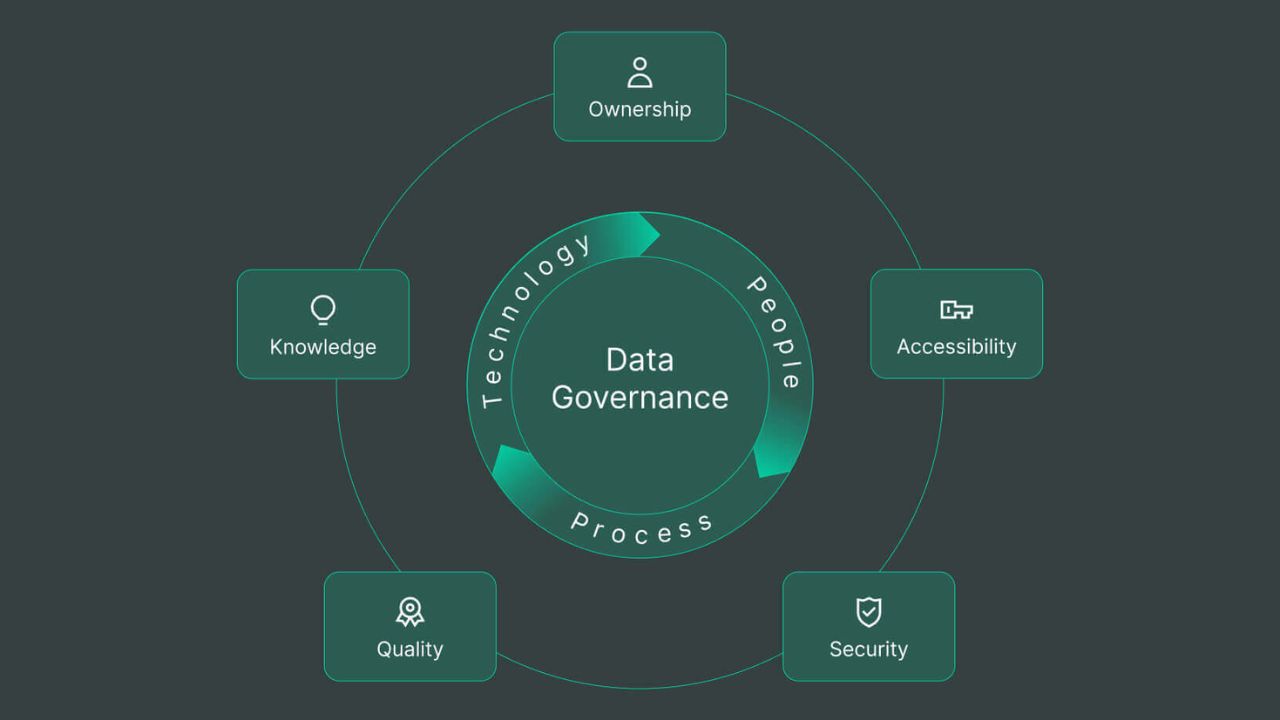
Data governance refers to the policies, standards, processes, and controls that manage data availability, integrity, security, and usage. It defines who owns data, who can access it, and how it should be protected.
A structured governance framework typically includes:
| Component | Purpose |
|---|---|
| Data Ownership | Assign accountability for data assets |
| Data Quality Standards | Ensure accuracy and consistency |
| Access Controls | Regulate permissions and authentication |
| Compliance Monitoring | Align with legal and regulatory standards |
| Lifecycle Management | Govern data retention and disposal |

These elements provide a foundation for both innovation and regulatory adherence.
Compliance
Regulatory requirements such as data protection laws and industry-specific mandates require organizations to handle personal and sensitive information responsibly. Non-compliance may result in financial penalties, reputational damage, and operational disruption.
Data governance frameworks integrate compliance directly into operational workflows. For example:
- Privacy impact assessments before launching new digital products
- Encryption protocols for sensitive data storage
- Audit trails for tracking data access

Embedding compliance within innovation processes prevents reactive corrections later.
Innovation
Innovation depends on access to reliable, high-quality data. Poor governance can limit innovation by creating uncertainty about data accuracy or legal risk.
When governance structures clearly define standards and responsibilities, teams can confidently develop analytics models, digital services, and AI applications. Structured oversight reduces duplication and improves collaboration across departments.
The relationship between governance and innovation can be summarized as follows:
| Weak Governance | Strong Governance |
|---|---|
| Inconsistent data definitions | Standardized data taxonomy |
| Unclear ownership | Defined data stewards |
| Reactive compliance responses | Proactive regulatory integration |
| Limited data trust | High data reliability and usability |
Strong governance builds trust in data, enabling informed experimentation.
Roles
Clear role definition is central to effective frameworks. Organizations often establish:
- Chief Data Officer for strategic oversight
- Data stewards for operational management
- IT teams for technical infrastructure
- Compliance officers for regulatory alignment
Cross-functional collaboration ensures that governance decisions reflect both business priorities and legal obligations.
Accountability mechanisms, such as reporting structures and performance metrics, reinforce these roles.
Risk
Data-related risks include unauthorized access, breaches, misuse, and quality errors. As organizations adopt cloud platforms and distributed systems, risk exposure expands.
Governance frameworks incorporate risk assessments, access controls, and continuous monitoring tools. Regular audits and vulnerability testing help identify weaknesses.
Balancing risk management with innovation requires proportionate controls. Excessive restrictions may slow development, while insufficient oversight increases exposure.
Technology
Technological solutions support governance objectives. Data cataloging tools, metadata management systems, and automated compliance monitoring enhance efficiency.
Artificial intelligence is increasingly used to classify sensitive data and detect anomalies. However, governance policies must also oversee these automated systems to prevent bias and ensure transparency.
Technology should reinforce governance principles rather than replace human oversight.
Culture
Organizational culture influences governance effectiveness. Employees must understand why data policies exist and how they support long-term objectives.
Training programs, internal communication, and leadership commitment encourage responsible data handling. When governance is viewed as a shared responsibility rather than a compliance burden, adoption improves.
Embedding governance awareness into performance evaluations further strengthens accountability.
Adaptation
Regulatory environments and technological landscapes evolve rapidly. Data governance frameworks must remain flexible. Periodic reviews ensure alignment with emerging laws and business strategies.
Adaptive governance allows innovation teams to test new initiatives within defined boundaries. Pilot programs and sandbox environments enable experimentation while maintaining compliance safeguards.
Data governance frameworks provide the structure needed to balance innovation with compliance. By defining ownership, implementing controls, and integrating regulatory requirements into operational processes, organizations create an environment where data-driven initiatives can flourish responsibly. Strong governance enhances trust, reduces risk, and supports sustainable innovation in an increasingly data-centric economy.
FAQs
What is data governance?
Management of data quality, access, and compliance.
Does governance limit innovation?
No, it supports controlled innovation.
Who oversees data governance?
Often a Chief Data Officer and team.
Why is data quality important?
It ensures reliable decision-making.
Can governance frameworks evolve?
Yes, they adapt to new regulations.