
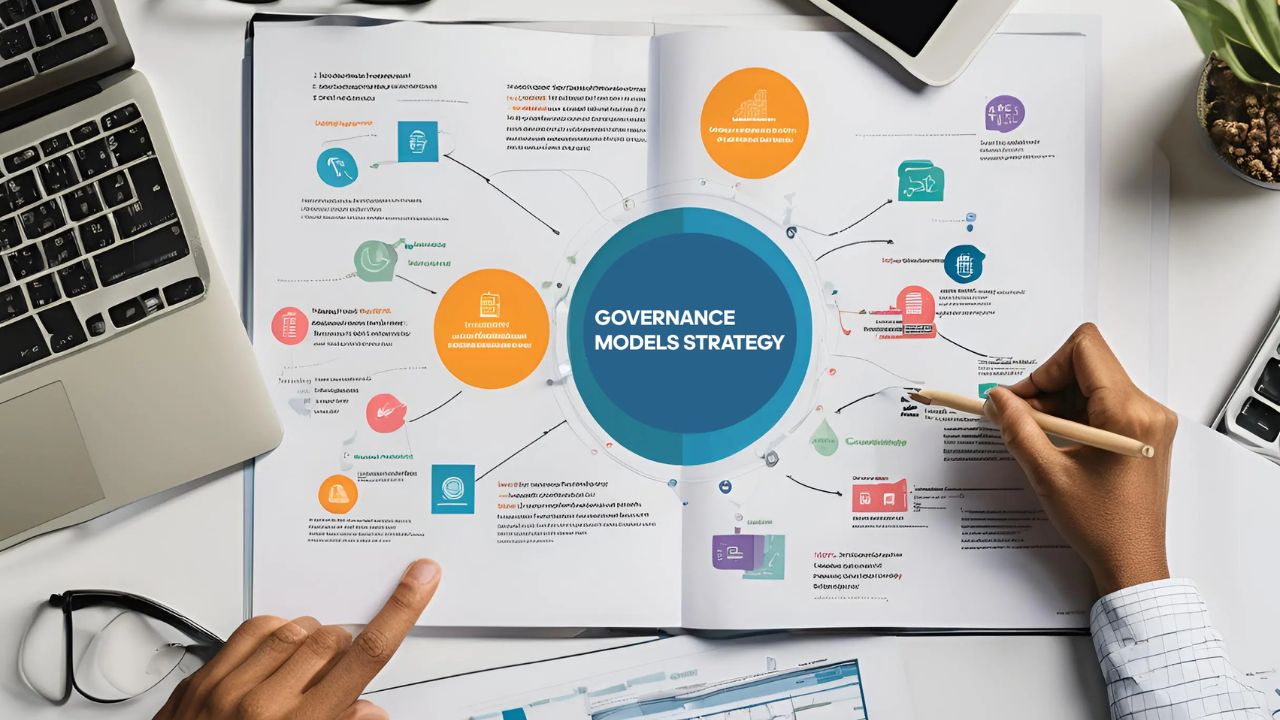
Technology drives modern enterprises, but without structured oversight, digital growth can quickly become fragmented and risky. Sustainable IT governance models provide the framework needed to align technology investments with long-term business objectives. As organizations expand cloud adoption, automation, and data analytics capabilities, governance must evolve to ensure resilience, accountability, and strategic value creation.
Sustainability in IT governance is not limited to environmental considerations. It refers to systems and structures that remain effective over time, adapt to change, and support continuous improvement.
Context
IT governance defines how decisions related to technology are made, monitored, and evaluated. It establishes accountability structures and performance benchmarks that guide digital initiatives.
In many organizations, governance challenges arise due to:
- Rapid digital transformation
- Decentralized IT operations
- Increasing cybersecurity threats
- Expanding regulatory requirements
Without sustainable governance, technology investments may fail to deliver measurable value or may introduce unmanaged risk.
Alignment

Strategic alignment is a core principle of sustainable IT governance. Technology initiatives must support overall business objectives rather than operate independently.
Alignment ensures:
- IT budgets reflect organizational priorities
- Digital transformation projects support measurable goals
- Risk management integrates with enterprise strategy
- Leadership maintains oversight of critical systems
When alignment is consistent, technology becomes a driver of competitive advantage rather than a cost center.
Structure

Effective governance models rely on clearly defined structures. Responsibilities must be assigned across leadership, management, and operational levels.
A simplified governance structure may include:
| Governance Level | Primary Responsibility |
|---|---|
| Board oversight | Strategic direction and accountability |
| Executive management | Policy implementation and monitoring |
| IT leadership | Operational execution and risk control |
| Internal audit | Independent review and assurance |
Defined structures reduce ambiguity and enhance decision-making clarity.
Risk
Risk management is central to sustainable governance. Digital risks include cybersecurity threats, data privacy breaches, system outages, and vendor vulnerabilities.
Sustainable models integrate:
- Continuous risk assessments
- Incident response frameworks
- Vendor risk evaluations
- Regulatory compliance monitoring
Embedding risk controls within governance processes strengthens resilience over time.
Performance
Measuring IT performance ensures accountability and improvement. Governance frameworks often rely on key performance indicators to evaluate system effectiveness.
Common IT governance metrics include:
| Metric | Purpose |
|---|---|
| System uptime | Measures reliability |
| Project delivery timelines | Assesses execution efficiency |
| Cyber incident response time | Evaluates risk readiness |
| IT cost-to-revenue ratio | Reflects financial efficiency |
Consistent performance tracking supports transparency and strategic adjustment.
Compliance
Regulatory environments continue to expand, particularly regarding data protection and cybersecurity. Sustainable governance models incorporate compliance as an integrated function rather than a reactive measure.
This includes:
- Policy documentation and updates
- Cross-border data management controls
- Audit trail maintenance
- Staff compliance training programs
Proactive compliance reduces legal exposure and strengthens stakeholder confidence.
Adaptability
Long-term success requires adaptability. Sustainable IT governance must evolve alongside technological innovation.
Adaptive governance includes:
- Periodic policy reviews
- Technology lifecycle planning
- Scenario-based risk testing
- Integration of emerging technologies into control frameworks
Organizations that regularly reassess governance structures are better prepared for disruption.
Transparency
Transparency strengthens trust among stakeholders. Clear reporting on IT risks, investments, and performance outcomes enhances accountability.
Governance transparency may involve:
- Board-level reporting dashboards
- Public disclosures of cybersecurity practices
- Internal risk communication channels
- Documented change management processes
Transparent communication reinforces institutional credibility.
Culture
Governance effectiveness depends on organizational culture. Employees must understand their roles in maintaining secure and compliant IT systems.
Cultural reinforcement includes:
- Leadership engagement in digital initiatives
- Continuous cybersecurity awareness programs
- Clear accountability standards
- Encouragement of responsible technology use
A culture aligned with governance objectives promotes sustainable outcomes.
Technology Support
Automation and analytics tools enhance governance efficiency. Real-time monitoring systems and centralized dashboards provide visibility into performance and risk indicators.
Digital governance tools can:
- Automate compliance reporting
- Monitor access control changes
- Track vendor performance
- Generate predictive risk assessments
Technology-enabled governance strengthens consistency and scalability.
Sustainable IT governance models provide the foundation for long-term digital success. By aligning strategy, risk management, compliance, and performance measurement, organizations can maintain control over expanding technological ecosystems.
Adaptability, transparency, and cultural engagement further reinforce governance resilience. As digital transformation continues to reshape industries, sustainable governance ensures that innovation remains structured, accountable, and strategically aligned.
FAQs
What is IT governance?
It oversees technology strategy and controls.
Why is sustainability important in IT governance?
It ensures long-term resilience and alignment.
Who is responsible for IT governance?
Boards, executives, and IT leaders share roles.
How does governance manage cyber risk?
Through policies, monitoring, and controls.
Can automation improve governance?
Yes, it enhances monitoring and reporting.