
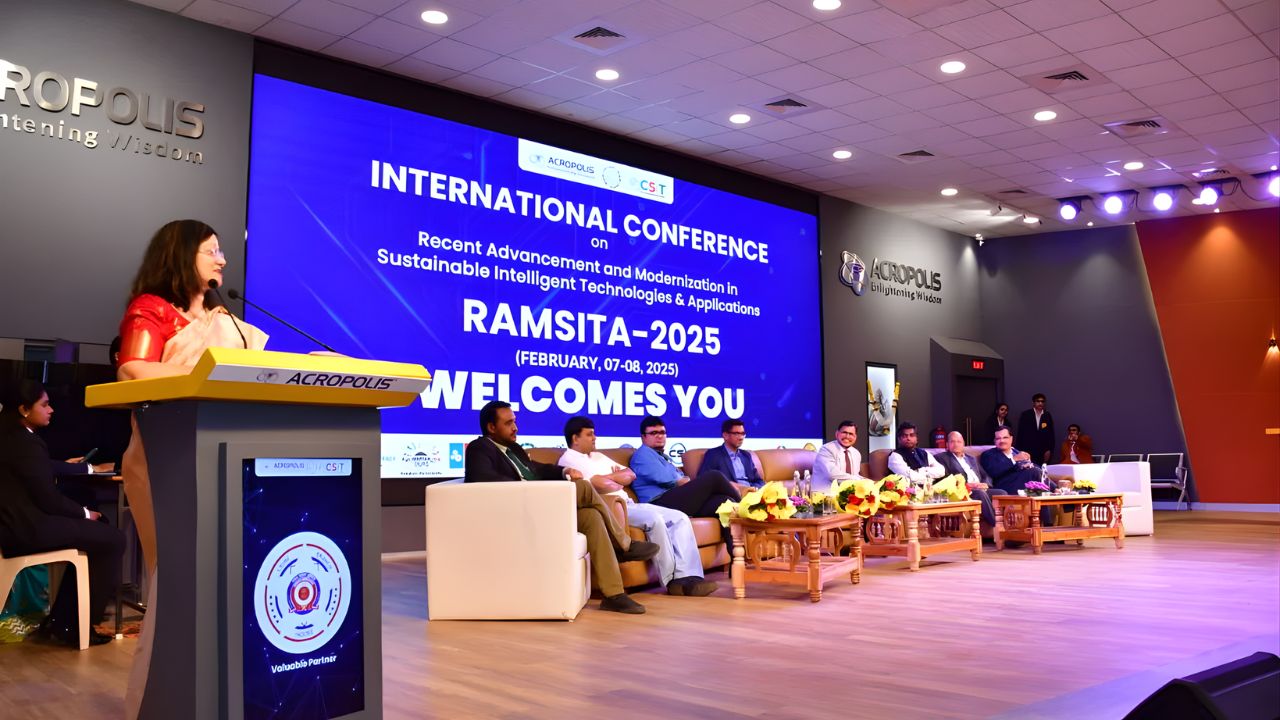
Annual academic conferences are often judged by attendance or visibility. ATISR’s Annual Conference places emphasis elsewhere, on outcomes, relevance, and alignment with institutional priorities. The event functions as a working academic forum where research, policy, and practice are examined in a structured and measurable way.
Introduction
ATISR’s Annual Conference is designed to support informed academic decision-making. Rather than operating as a standalone event, it fits within the institution’s broader academic and research strategy. Sessions are planned to encourage evidence-based discussion, clarify priorities, and support long-term improvement across teaching and research activities.
Purpose

The primary purpose of the conference is to translate academic discussion into usable outcomes. Conference themes are selected to reflect current institutional and sector-wide challenges.
This focus ensures that presentations and panels contribute to shared understanding rather than isolated viewpoints. Purpose-driven planning supports coherence across sessions and disciplines.
Research
Research presentations remain central to the conference agenda. Emphasis is placed on applied and practice-oriented studies.

Presenters are expected to address methodology, findings, and implications. This structure supports critical engagement and reinforces research quality standards. Research discussions often extend beyond results to consider implementation and scalability.
Dialogue
Structured dialogue is a defining feature of the conference. Panels, moderated discussions, and question-and-answer sessions are integrated into the program.
This format allows participants to test ideas, challenge assumptions, and clarify interpretations. Dialogue is treated as a core outcome rather than a secondary activity.
Collaboration

The conference encourages collaboration through targeted sessions and thematic alignment. Interdisciplinary and cross-sector discussions are prioritized.
Collaboration is framed as a strategic process. Participants explore formal partnerships, joint research initiatives, and shared academic resources rather than informal networking alone.
Quality
Academic quality underpins all conference activity. Sessions address research ethics, evaluation standards, and publication practices.
By embedding quality considerations across topics, the conference reinforces consistency and accountability. Quality assurance is presented as an ongoing responsibility rather than a compliance exercise.
Leadership
Academic leadership is reflected in both content and structure. Senior academics and institutional leaders contribute to discussions on governance, strategy, and policy alignment.
Leadership engagement helps connect conference dialogue with institutional planning and operational decision-making.
Outcomes
The table below summarizes key outcomes and their significance:
| Outcome Area | Conference Focus | Resulting Value |
|---|---|---|
| Research | Applied studies | Practical relevance |
| Dialogue | Moderated exchange | Shared understanding |
| Collaboration | Structured engagement | Long-term partnerships |
| Quality | Standards and ethics | Academic credibility |
| Leadership | Strategic alignment | Informed planning |
These outcomes illustrate the conference’s emphasis on substance over scale.
Evaluation
Post-conference evaluation is used to assess effectiveness. Feedback, session outputs, and follow-up activities inform future planning.
This evaluation process supports continuous improvement and ensures that conference outcomes remain connected to institutional goals.
ATISR’s Annual Conference demonstrates how academic events can generate meaningful outcomes. By focusing on research relevance, structured dialogue, and quality assurance, the conference contributes to sustained academic development. Its value lies not in volume of activity, but in clarity, alignment, and measurable impact.
FAQs
What is the main goal of ATISR’s Annual Conference?
To generate practical academic and research outcomes.
What type of research is presented?
Applied and practice-oriented research.
How does the conference support collaboration?
Through structured, interdisciplinary engagement.
Why is quality emphasized at the conference?
To maintain consistent academic standards.
How are conference outcomes evaluated?
Through feedback and follow-up review.